
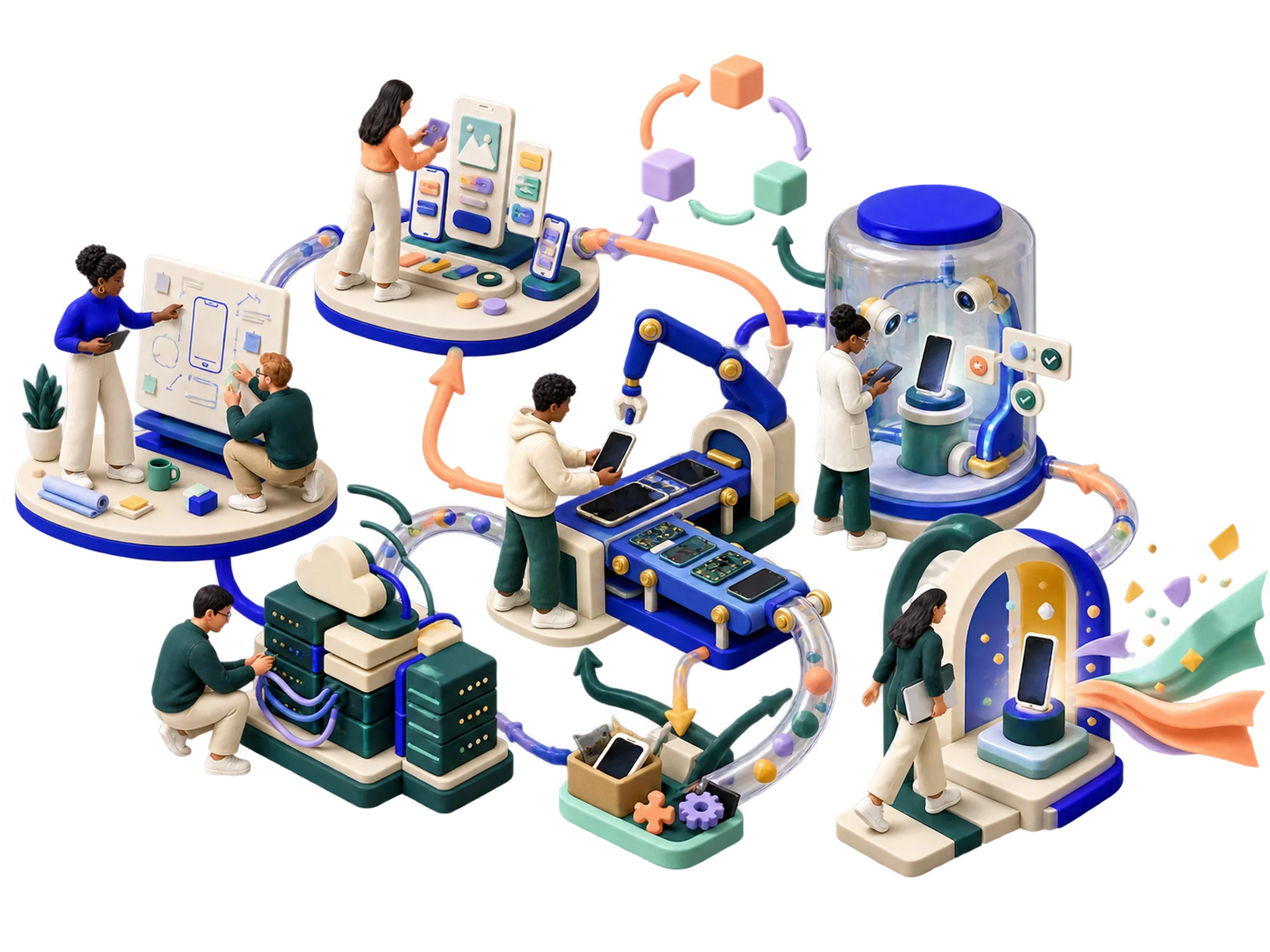
Timeline questions tend to get answered with a single number, when the honest answer depends entirely on scope, the same way cost does. Here is a more useful way to think about mobile app timelines, by complexity tier and by the factors that actually cause delays.
Realistic Timelines by Complexity
A simple app, a single-purpose tool with basic screens and a light backend, commonly takes 2 to 4 months from kickoff to launch. A medium-complexity app with accounts, a real backend, and a handful of integrations typically runs 4 to 7 months. Complex or enterprise-grade apps, marketplaces, apps with payments, messaging, or offline sync, frequently take 7 to 12 months or longer.
What Actually Causes Delays
Unclear requirements at kickoff
Projects that start development before the core user flows and data model are actually settled tend to rework significant chunks of work mid-build, which is the single most common source of schedule slippage.
Third-party integration surprises
Payment processors, mapping services, and other third-party APIs often have approval processes, rate limits, or documentation gaps that only surface once a team is actually integrating against them, adding unplanned time.
App store review cycles
Apple and Google both review submissions before an app goes live, and a rejection over a policy issue can add days to weeks to a launch date that looked fixed on a project plan.
Scope changes mid-build
New feature requests that surface once stakeholders see working software are common and often reasonable, but they extend timelines unless they are explicitly evaluated against the existing schedule rather than absorbed silently.
How to Protect Your Timeline
Lock the core user flows and data model before development starts, even if visual design continues in parallel. Identify every third-party integration early and test against their sandbox environments as soon as possible, not in the final weeks. And build app store submission time into the plan from day one rather than treating it as an afterthought once development wraps.